Month: January 2012

How to Start a Story

How to Start a Story

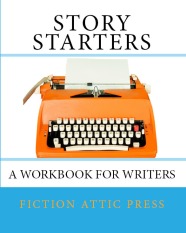
storystarterscover2smallOne of the questions I hear frequently from aspiring writers is, “How do I start a story?” Even seasoned writers have days when the story won’t come. Talking to a reporter for Interview Magazine in 1995, Martin Amis said of novel-writing, “If I come up against a brick wall, I’ll just go and play snooker or something or sleep on it, and my subconscious will fix it for me.” Good advice, for sure. But if snooker and the subconscious don’t do it for you, here are a few tips to get you going.

  • You can begin “in medias res,” or in the middle of the action. When you’re telling a friend a story, you rarely begin with, “I was born in such-and-such hospital in such-and-such city.” Rather, you jump forward to the exciting part, the middle of the action of your own life. “I was standing in front of the old movie theater on Amsterdam Avenue when…”
  • You can begin with a character in a strange or tense situation (Gregor Samsa wakes up as a cockroach in “The Metamorphosis”, Mersault is on trial for murder in “The Stranger”).
  • You can begin with a line or two that describes the setting, then move on to who is in the setting, and why.

    Read More Read More

Creative fidgeting

Creative fidgeting


courtesy of WFMU.org

An article by Roland Rotz, Ph.D., in ADDitude Magazine this month claims you shouldn’t fight the fidget, especially when it comes to children with ADHD:

Doing two things at once, it turns out, can actually help focus the ADHD brain on a primary task.

Experts believe that engaging in an activity that uses a sense other than what’s required for your primary task — listening to music while reading a social studies textbook, for example — can enhance focus and improve performance in children with attention deficit disorder. These secondary tasks are called fidgets — mindless activities you can do while working on a primary task.

Rotz recommends walking, moving around, doodling, using multicolored pens and pencils, keeping your hands busy, listening to music, and chewing gum.

I think anyone–with or without ADHD–can benefit from a bit of creative fidgeting. When I’m stuck in a novel I’m writing, it always helps to get up and move around. When we lived in the Outer Richmond in San Francisco, I used to take long walks on Ocean Beach (well, yes, that does sound like a personal ad, but I did!), and I never came home from one of those walks without a few paragraphs in my head. Something about the zen aspect of moving with no invited noise–I never wear headphones when I walk, so the noise was that of the waves and water, and the hum of traffic on the Great Highway–intensified my focus, such that I would write in my mind as I walked, repeating the sentences in order to memorize them.

I say “invited noise” because, while noise is inescapable, we don’t have to invite it in. Turning off the headphones when you’re running or walking, or turning off the TV when you’re on the treadmill, or turning off the radio in the car, is a way of keeping the endless, not-so-ambiant noise at bay. Of course, one of the fidgeting activities recommended in the ATTitude article is listening to music–so it really depends on the person. My husband always listens to music when he’s writing or reading, and it works for him, but anything with words completely stumps me, because the words crowd out the ones I’m trying to write down. That’s why I can’t write in cafes, which is a method some of my writer friends swear by.

Think about your own creative process. Are there any kinds of fidgeting you do that bring you focus?

Creative Fidgeting

Creative Fidgeting

courtesy of WFMU

An article by Roland Rotz, Ph.D., in ADDitude Magazine this month claims you shouldn’t fight the fidget, especially when it comes to children with ADHD:

Doing two things at once, it turns out, can actually help focus the ADHD brain on a primary task.

Experts believe that engaging in an activity that uses a sense other than what’s required for your primary task — listening to music while reading a social studies textbook, for example — can enhance focus and improve performance in children with attention deficit disorder. These secondary tasks are called fidgets — mindless activities you can do while working on a primary task.

Rotz recommends walking, moving around, doodling, using multicolored pens and pencils, keeping your hands busy, listening to music, and chewing gum.

I think anyone–with or without ADHD–can benefit from a bit of creative fidgeting. When I’m stuck in a novel I’m writing, it always helps to get up and move around. When we lived in the Outer Richmond in San Francisco, I used to take long walks on Ocean Beach (well, yes, that does sound like a personal ad, but I did!), and I never came home from one of those walks without a few paragraphs in my head. Something about the zen aspect of moving with no invited noise–I never wear headphones when I walk, so the noise was that of the waves and water, and the hum of traffic on the Great Highway–intensified my focus, such that I would write in my mind as I walked, repeating the sentences in order to memorize them.

I say “invited noise” because, while noise is inescapable, we don’t have to invite it in. Turning off the headphones when you’re running or walking, or turning off the TV when you’re on the treadmill, or turning off the radio in the car, is a way of keeping the endless, not-so-ambiant noise at bay. Of course, one of the fidgeting activities recommended in the ATTitude article is listening to music–so it really depends on the person. My husband always listens to music when he’s writing or reading, and it works for him, but anything with words completely stumps me, because the words crowd out the ones I’m trying to write down. That’s why I can’t write in cafes, which is a method some of my writer friends swear by.

Think about your own creative process. Are there any kinds of fidgeting you do that bring you focus?

Great books to read in 2012

Great books to read in 2012

Under the tree on Christmas morning, a swell stash of books that my personal Santa picked up from Green Apple Books on Clement Street in San Francisco

The Jokers, by Albert Cossery
I know nothing about this book, which is precisely why I love Green Apple: Santa will always find something he didn’t know he was looking for.

A House with No Roof, by Rebecca Wilson
A memoir by the daughter of labor leader Dow Wilson, who was murdered when the author was 3. Wilson writes about growing up with and later caring for a loving but mercurial mother, in the shadow of Rebecca’s violent and much older brother, Lee, in Bolinas, California. With an introduction by Anne Lamott. I’m not sure why, but I read this book in one day. It is a coming of age tale that focuses not on the murder itself but rather on the repercussions of the father’s death on the individual members of the author’s family.

The Ice Princess, by Camilla Lackberg.
A few years ago, my husband bought me The Man on the Balcony, a Martin Beck mystery from the crime writing husband and wife team Maj Sjowall and Per Wahloo. I’d never read crime thrillers before, and my husband thought some easy reading might be relaxing. Well, I was hooked, and I quickly made my way through all of the Martin Beck mysteries. At the time, I thought of them as a guilty pleasure, but I’ve since dropped the “guilty” part and have come to consider a good thriller to be simply a great pleasure, guilt-free. Now, for every birthday, anniversary, and Christmas, along with a couple of novels in translation by writers I’ve never heard of , my husband gives me a crime thriller, and it’s usually the first in the stack to get read. Good writing is good writing, no matter the genre.

The last great crime thriller I read, by the way, was The Boy in the Suitcase, by Lene Kaaberbol and Agnete Friis. I’ve also become partial to the Icelandic writer Arnaldur Indridason, who has created a wonderful character in Inspector Erlandur Sveinsson.

The Year of the Hare, by Arto Paasilinna
I haven’t started this one yet, but any book that the wonderful travel writer Pico Ayer wants to “live in” piques my curiosity.

If you go in for an element of surprise, join the Green Apple Book Club, whereby you receive a new book i in the mail each month, handpicked by the excellent Green Apple Guys, Pete & Kevin.