Category: On Writing

Writer success story – why sometimes you have to tune out the criticism

Writer success story – why sometimes you have to tune out the criticism


Roald Dahl authored dozens of books, including the beloved Charlie and the Chocolate Factory, James and the Giant Peach

“This boy is an indolent and illiterate member of the class.” age 16, summer term English composition

“A persistent muddler, vocabulary negligible, sentences malconstructed. He reminds me of a camel.” Summer term 1932, age 16, English composition

“Consistently idle, ideas limited.” Autumn term, 1932, English composition


Roald Dahl is a great writer. He is probably my favorite writer.” Oscar, age 9


The Art of Simplicity – tips for writers from graphic designer Chip Kidd

The Art of Simplicity – tips for writers from graphic designer Chip Kidd

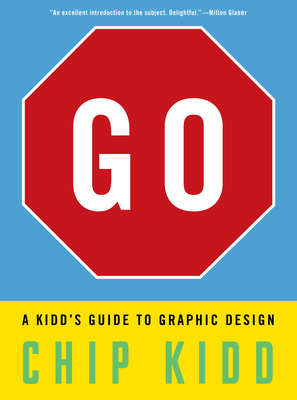
I’ve been reading Chip Kidd’s Go: A Kidd’s Guide to Graphic Design. Although the book was written for a younger audience, it’s a gorgeous, superbly readable crash course in the history and principles of graphic design.

One of the lessons that writers can take to heart is Kidd’s explanation of simplicity vs. complexity. “Simple, direct visual elements will get the attention of your viewer in a different way than complex images that the writer will have to decode,” Kidd writes. Complexity, on the other hand, “has to be very carefully managed or it becomes chaos.”

The best writing strikes a balance between simplicity and complexity. As a writer and as a reader, I am drawn to very direct sentences that are simple to navigate. I’m not talking about sentences that are very short, or sentences in which vocabulary is limited to the lowest common denominator. I’m talking about sentences that are clear and meaningful. The writer’s goal, on a sentence by sentence level, should be clarity. Overblown descriptions, adjective pile-ups, and self-conscious phrasing hinder clarity. Any sentence that screams “look at me!” fails the reader. The writer’s job is to communicate a story. The sentences should be clean enough to communicate that story effectively.


For me, complexity comes into the picture in the construction of the plot and the pattern of the novel. Kidd uses a wonderful spirograph illustration to demonstrate the principle of complexity. When you write a novel, there are many elements at play, including character, theme, plot, setting, and point of view. All of these elements must somehow find their way into an elegant design. The elements intersect throughout the novel with various degrees of symmetry, layered in a way that makes each element visible but none overpowering.

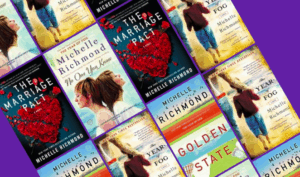
Michelle Richmond is the New York Times bestselling author of four novels and two award-winning story collections. Ger her latest novel, Golden State.

Kidd’s book is a wonderful experience for anyone interested in graphic design or the visual arts. But it is also a powerful reminder that, as writers, we can find inspiration anywhere and everywhere.

A Handful of Glorious Pages

A Handful of Glorious Pages

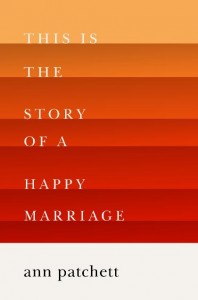
This Is the Story of a Happy MarriageAre you a novelist, a short story writer, or both?

I’m currently reading Ann Patchett’s essay collection, This Is the Story of a Happy Marriage, which chronicles Patchett’s journey to becoming a writer. There are plenty of quotable passages in the book, but one of my favorite has to do with the short story form:

Love the short story for what it is: a handful of glorious pages that take you someplace you never knew you wanted to go.
As both a novelist and a short story writer, I can tell you that I love the way stories happen: you write a sentence, and then another sentence, and a few weeks and twenty or so pages later, you have arrived at a totally unexpected destination.How does this differ from writing a novel? With a novel, while I don’t know exactly where I’m going or where and how the novel will end or what tangents it will take, I do usually begin with a general sense of direction. A sense of direction is important, because I know that a novel will require an investment of at least a couple of years. So I begin with a setting, a character, and a problem that needs to be solved or a question that begs to be answered.

In my forthcoming novel, Golden State, for example, I began with two questions: 1) What would happen if California tried to secede from the nation in the present day? 2) What if the narrator’s estranged sister suddenly reappeared in her life? The novel was built from these questions, which married the personal with the political in a way that was very enjoyable to write and, I’ll admit, quite challenging to orchestrate.

With a short story, I feel more free, because I know my investment of time will be much shorter. I often don’t know what the problem is when I begin, or even who the major players are. I start instead with language–a series of words that present themselves in my brain and somehow compel me to follow them with other words.

Many novelists write only novels. Some short story writers write only stories. But the vast majority of published fiction writers do –or have done–some combination of both. Fiction writers frequently debut with a story collection, which is followed by a novel. One reason for this pattern, I believe, is that short stories tend to be the preferred form in graduate writing programs, so many writers come out of their MFA program with a story collection in near-publishable shape. After the writer gets a few good reviews and catches an agent’s eye with a story collection, he or she either a) decides that it would be fun to write a novel or b) concedes to the demands of the marketplace, which favors novels over story collections.

As for me, writing novels is my bread and butter, and I never feel quite whole unless I’m working on a book-length project. In fact, I can’t remember a time in the past twelve years when I wasn’t working on a book! But there is sustenance to be had in short stories too, and when I am feeling tired of my novel-in-progress, or antsy, or simply inspired in a different direction, I often begin a short story.

When you are feeling at wits’ end about your novel, I encourage you to set it aside for an hour or day or a week and begin a short story instead. It is possible that the writing of the story will push you back, joyfully, to your novel, and that you will abandon the story in short order for the bigger project. But it is also possible that you will sink blissfully into the freedom of the story, and that you will emerge, days or weeks later, with “a handful of glorious pages.”

As always, happy writing! Please join the conversation on twitter, stop by my facebook page, or read (and submit) good stories at Fiction Attic.


Where to Find Pre-designed Ebook Covers

Where to Find Pre-designed Ebook Covers

These sites offer quality pre-designed ebook covers:

Literra Designs: covers starting at just $35. Literra keeps costs low by using free stock images. You can customize the cover text for free. Back-of-the book and spine designs cost extra.

Beetiful.com is much pricier, at $165 per cover, but the covers tend to look a bit more professional. If you’re serious about marketing your work, I recommend Beetiful.

Fostering-success.com has pre-designed covers starting at $99, plus an additional $85 for full wrap. Don’t let the weird website name turn you off. They have some decent covers at a mid-range price.

CCRbookcoverdesign skews more toward sci-fi and horror. If genre is your thing, these could work. Very affordably priced at $45-$75. (The primary image for this post is from CCR)

Damonza.com offers very good-looking, unique, artistically inclined covers, but at a heftier price than the others–$195. If you don’t mind spending more, this site is worth checking out. Unfortunately, some of the covers, while arresting, have titles that aren’t as readable as you might like them to be.

Goonwrite.com has covers starting at $30. The brightness of the images definitely gives the covers a pre-packaged look, but that doesn’t mean they’re not eye-catching. If you scroll down you’ll find searchable genre categories on the left hand side of the page.

Author Marketing Club  features covers by a number of designers. You choose the design, and AMC hooks you up with the designer. Covers are affordably priced, although some look a bit too formulaic. AMC offers is a membership of $105 per year, which gives you free access to all of their ebook cover designs.